
Seek to Understand
By Peter Benson, LMFT
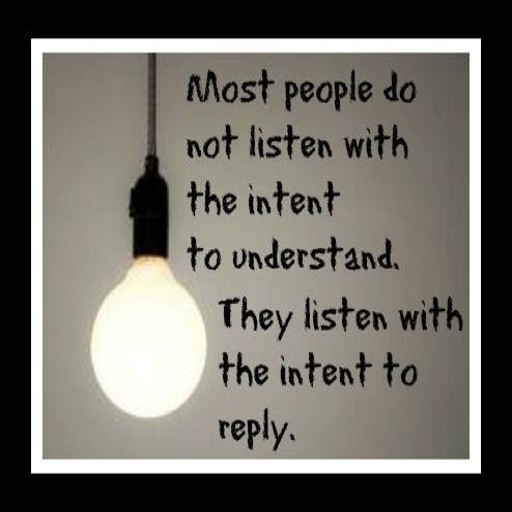
During my education I took notice of the following quote on the wall:
I’ve learned that this quote is attributed to Stephen R. Covey (Habit #5 in the 7 Habits of Highly Effective People.) As I have had the privilege of working with individuals, couples, and families in a therapy setting, I have found this to be a common occurrence all too often in relationships.
Could it be you? Have you ever caught yourself drifting off while your spouse is talking? Have you found yourself searching your brain or your partner’s words for an offensive (or defense) comment during an argument? Have you found yourself chomping at the bit for your turn to share a story or a point in a conversation rather than really listening to what is being said? I have definitely found myself in one or more of these situations.
I took this principle and decided to put it to the test in my relationships. It took effort, it took time and it took self-discipline, but it worked! This principle of listening with the intent to understand has opened the lines of communication in my marriage. It increased my partner’s trust in me. It even healed some of our wounds from the past.
Let me share a few suggestions about this principle that you might take and apply.
- 1- Stop what you are doing. This is difficult. If you are like me, when you get started on something, you go until it is done. When a child or partner approaches you during a focused activity and wants something or wants to talk, it can be easy to shoo them away with the promise of “Maybe later.”. I had to learn to stop. Stop my homework. Stop cleaning. Stop working. Stop and listen.
- 2- Commit yourself to understanding. This takes effort. You need to take your “stuff” and set it to the side for a minute, and commit to focusing 100% on the person speaking. I do this by visualizing myself taking a stack of books (my stuff) and setting to the side, out of sight and then I zone in to my partner. You might find a different process that works for you; but whichever way you choose to do this, it is important that you make sure you are committed to understanding.
- 3- Show you are listening. This is done by using your communication skills. Eye contact, nodding, giving verbal cues that you are listening. You can say things like, “Mhmm,” “That makes sense,” “I hear you,” or “Can you tell me more about that?”
- 4- Reflect what you hear. This means you take in what they are saying (the content of the communication) as well as what they mean/imply/need (the process of the communication). You hear, see, and feel the process of communication through the speaker’s tone of voice, facial expression, body language, and the feeling in the air. As you take these things in, you reflect them back so the other person knows they are being understood. “What I hear you saying is that you are at your wits end with Jenny because she just won’t listen.”
- 5- Stay tuned in. When you reflect, you may get something wrong; that is okay. They still know you are listening and then they can correct you and clarify. You can reflect again or show you understand.
As you commit to listening with the intent to understand, your relationship will flourish, you will feel a new investment in your relationship, and there will be increased mutual trust within your relationship.
For more information on anxiety counseling and how it can help you click here.
While it is important to first seek to understand in a relationship, it is also important to feel understood. Look for a post next week about seeking to be understood.
Recent Posts
- Supporting Families Through Life Transitions: Parenting, Blended Families, and Major Changes
- Improving Family Communication: Practical Tools for Stronger, Healthier Relationships
- Premarital Counseling in American Fork: Build a Strong Foundation
- Premarital Counseling: Key Conversations Every Engaged Couple Should Have
- Navigating Conflict in Healthy Ways: Skills Every Couple Can Use to Grow Together